Before this issue went into
print, Serbia resounded with Vojislav Seselj's
statement given before the tribunal in the Hague
that Zvezdan Jovanovic, the man who murdered Zoran
Djindjic, deserved the glory of Gavrilo Princip.
Some condemned the statement, others dissociated
themselves from it, while many are silent. How
should we interpret this?
The things are not simple. For years now, both
before and after 2000, there have been public
kudos for crimes and criminals, both those convicted
by national courts, like Zvezdan Jovanovic or
Milorad Ulemek, and those that have not been convicted,
but were accused of the gravest crimes - Slobodan
Milosevic, Ratko Mladic, Radovan Karadzic and
Vojislav Seselj himself. Of course, those not
convicted are entitled to the presumption of innocence
and the right to defend themselves from accusations.
But this does not entail that the crimes can be
denied till outcome of the trial is known or that
responsibility of the most powerful leaders of
the formations that committed these concrete crimes
can be ignored, even consenting to praise the
offense. Is it not common consent, at least for
reasonable people, that, for instance, Hitler
and Stalin were villains, though they were not
tried or convicted?
However, this is not only about crimes committed,
but also about threats. These days, with the election
campaign in full swing, Belgrade was covered with
placards showing
| Serbian president
and deputy prime minister, Tadic and Djelic,
after signing of the EU Stabilization and
Association Agreement, depicted as traitors.
Along with this "wanted" poster,
another placard was posted, glorifying Punisa
Racic, murderer of Croatian Peasant Party
(CPP) MPs in National Parliament of Kingdom
of Yugoslavia in 1928. The crime was sentenced
by a court and condemned by the democratic
part of the public. This condemnation was
repeated a quarter of a century later, in
a publication by a part of Yugoslav emigration,
which included some notable Serbs. In August-September
issue of Nasa rec in 1953, they published
this opinion: "Stjepan Radic (CPP MP),
with all his virtues and flaws, was a loss
not only for Croatian peasants, but for
Yugoslavia as well. We, for our part, as
a young generation, should clearly and completely
dissociate ourselves and |
|
|
|
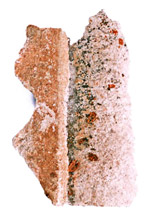
A piece of Decani
portal
|
 |
the nation from the unhappy crime committed against
Stjepan Radic and his colleagues in the National
Parliament on 20 June 1928".
If people used to know what crime was, and believed
it was "unhappy", can it be that in
different circumstances some people believe there
is a "happy" crime? It seems like this
exactly is happening in Serbia. Excess perverseness
is noted: Racic's shooting stemmed from anger
at those who refused to acknowledge his heroic
deeds in the wars won, while new assassins would
want to charge for their deeds in lost numbers,
and even to take advance payments for future feats.
To top it all, those ruining the nation present
themselves as saviors.
Commending crimes (criminals) is not just an occasional
incident, but a part of systematic creation of
atmosphere in which instigation of different forms
of violence, and even crimes, has become everyday
reality. Many have been marked as targets, including
the president of Serbia, who has been threatened
with arrest and murder for many years. This is
not happening away from the public eye, but right
before it, mostly with speeches of leaders of
the Radical Party at parliamentary sessions, which
are broadcast on TV and via the suitable media.
There is no respect for legitimacy and legality
of institution of the president, or for the concrete
person, and there is even less concern for the
citizens and the public. Furthermore, the very
circles that systematically demonize him also
issue accusations that, as vice-president of the
Democratic Party of Serbia and former minister
Slobodan Samardzic said, Serbian president "is
the biggest pettifogger" in these already
confused and tense times for our country. Remember,
a similar atmosphere was conjured around prime
minister Djindjic ahead of his murder, and is
sinisterly recreated even today.
Let us go back to Seselj's statement we quoted.
Whatever we may think about value of his work,
written also "on the field", about his
haughtiness, rudeness, brazenness, ruthlessness
and other manners he demonstrated over the years,
it is impossible to
|
escape the impression
there is some method in it. The least
puzzling characteristic is that it is
primarily directed at, otherwise understandable,
defense of crimes committed in the past,
including his own. Secondly, the brutal
presentation gives him the glory of the
"defiant Serbian hero" that
"blows away" world leaders and
their conspiracy against Serbs, clearing
the path toward the final triumph. Furthermore,
with this statement, given at the time
of negotiations about his party entering
the government, when reasonable politicians
strive to demonstrate supreme tactfulness,
Seselj has warned his partners and the
public that he and his supporters
|
|
|
must be accepted as they are, without illusions.
Finally, this statement is also a clear road sign
for his numerous and powerful followers, who are
getting ready to assume power, that they will
settle accounts with those vowing in Serbia's
democratic future. "Why would we need any
future, when we have a glorious past", is
what they are saying not only to their opponents,
but to everyone, everyone, everyone….
If Seselj's commendation of crime were an exception,
it would not be such a big threat for the presence
and future of Serbia, despite the growing power
of his party. The things get more serious when
this becomes a part of the ruling ideology, which
is what is happening now. This should not surprise
us, as we have been watching for a while how the
main protagonists of crimes and robbery mince
their words as the biggest fighters for justice,
how those corrupting declare themselves as the
main opponents against corruption, how the person
who brought down several governments is offered
as the main builder of the future government,
how the chief of the state TV station has bludgeoned
in public places "the inconvenient ones".
In the end, can it be otherwise, in the country
where former secret police gigolo is promoted
into the top official arbiter of moral?
However dismal this moment may seem, it is far
from truth that lies and violence are the inevitable
destiny. Specific real persons generate all that
happens to us. The trouble is that the power of
those who engage in and defend crimes and robbery
is growing. The fear of them is real. The despise
and indignation are expected. So is the resistance.
But real and principled alternative to lies and
violence, which we always had, is currently silent,
which does not mean it does not exist. Standing
up against crime and looting is necessary, but
it is not enough. Only when advocating truth and
freedom starts to account publicly for its rises
and falls, a real chance to exit this difficult
and tormenting situation will be created.
|
| |
Nebojsa
Popov |