This year's Easter address
with which the old patriarch Pavle spoke to the
faithful and Serbian citizens en general - published
in Pravoslavlje on 1 May 2008 - contained many
elements that incited different interpretations
of its message. Of course, the main tone was the
message of hope, which was quite clearly promoted
with truth and meaning that Jesus' announcement
to the man and the world had. The energy of the
hope has truly not been exhausted even two millenniums
after it was first offered to the world. It is
equally needed today, on the wings of the momentum
of our consumerist civilization, when it is becoming
increasingly clear that the nature and the environment
will defend themselves from us, while our response
will be to threaten with destruction, which many
may not be fully aware of.
Kosovo and the Kosovo problem are again seen as
"testimony" and this will confuse many
- but not some others, because political motivation
in using this pattern is quite
|
blatant. Anyway, the
address itself contains an idea referring
to the New Testament, the cornerstone
of Christianity - "No one shall set
another rock, nor can it be set".
This is quite true, but further in the
text Kosovo is seen as a testament in
the full theological meaning of the word
- "We have lived and died with Kosovo
testimony". Somewhere in Brussels,
a Pontius Pilate is sitting, ready to
wash his hands, while the just man, the
only one to know where the earthly kingdom
ends and the heavenly begins, is being
crucified. A lengthy lament for Kosovo
follows, and we quote - "If I forget
thee, Kosovo, if I forget thee, Metohija,
may I be forgotten by God's Right Hand!
May my tongue be glued to my palate if
I do
|
|
|
|
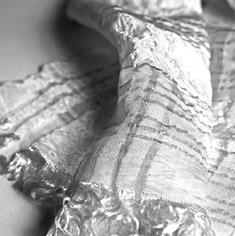
Shawl made of Prizren
silk
|
 |
not remember you, if I do not promote Kosovo and
Metohija as the beginning of my joy". The
honest desires of congregational fathers should
not be dismissed, despite the pathos, but the
trouble with the form is that this is not just
a paraphrase of a familiar Biblical lament or
crying over Jerusalem, but literary a quote without
quotation marks. Everything is there, but it has
nothing to do with Kosovo and the real circumstances
there, or even with troubles that harass Kosovo
Serbs, standing between the hammer of one bad
policy dictated from Belgrade and anvil of the
Albanian majority, prevailingly chauvinistic,
whose political behavior is again following its
own political and mythological patterns. There
is no mention in the address about how some European
peoples have reconciled and found a formula for
a potential common existence. Patterns recklessly
used may kill hope.
Both in state and the Church, the orphans of the
"great" Serbia have really been left
speechless and have nothing to offer but empty
phrases.
Attractive pathetic phrases and paraphrases -
which are growing in numbers - cannot be a starting
point for a real policy of the possible. A good
part of bishops in dioceses is obsessed with a
vision of a world without hope, because "a
monstrous globalist civilization is created, tailored
by twisted moral". There is some truth in
it, but hope must be a man's companion if we really
want a world and order in it that are not "without
yeast of eternal meaning of human life".
All the troubles of bereft and confused children
of the great Serbia stem from frustration and
result in the conspicuous uneasiness in relation
to the European civilization - witness the archaic
patterns with no new contents. What Europe wants
- the fathers and teachers of the Serbian Orthodox
Church are saying - is to "turn us into a
shapeless mass" among peoples. If this is
not happening to Orthodox Greeks and Bulgarians
who are in the EU, there is no need to emphasize
the idea so dramatically. Kosovo will remain in
the map of mythical consciousness as some sort
of both earthly and heavenly Jerusalem, but this
will not suffice for people who live there. Therefore
a consolation is offered, but it is not much of
a consolation: one is supposed to arm oneself
with patience, as the Jewish people did and lived
to see Jerusalem "returned" after two
thousand years. It seems hardly necessary to relive
the history of Jerusalem - the prominent Serbian
politician V. Kostunica repeats, unperturbed,
that the suffering of Serbs and Jews are comparable,
as these two are "victimized and suffering
nations". It seems that the "children"
do know that they are not up to the "great
goal", hence the frustration, grotesque at
times. Bishop Artemije calmly called the current
president Boris Tadic and his ministers "traitors"
who should not be allowed to govern Serbia, because
archaic patterns allow for such logic. But there
is no logic there. Unity can be a cover for a
policy that has mainly proved to be a bad policy.