Serbian-Russian
agreement to sell NIS to Gazprom and construct
a gas pipeline through Serbia signed
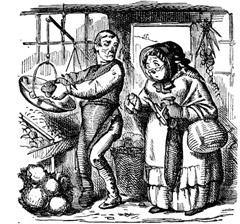
A Big Political
Grocery Store
Almost equally as the
Kosovo status issue, the sale of Naftna industrija
Srbije oil company to the Russians captivated
attention of Serbian public for weeks. After
14 December 2007, when the EU Council of Ministers
reached a unanimous conclusion that Kosovo status
talks between Belgrade and Pristina were exhausted
and that "coordinated independence"
of the southern province would be the only possible
solution, and its features yet to be agreed
within the Union, the official Belgrade definitely
made its mind: the NIS will be sold, without
a tender procedure, to Russians for 400 million
euros, plus 500 millions which the Russians
must invest into the company's development by
2012. Some resistance within the Government
was offered, limply and unconvincingly as usual,
by ministers of the Democratic Party, while
those from G 17 party were much noisier, claiming
the price was low, the Russian offer was humiliating
and that NIS should still be sold via a tender,
so that the transaction can be transparent-
something that has for a long time been a commonplace
in European Union, towards which we strive.
Kostunica and his ministers, however, insisted,
almost offended, that disputing the Russian
offer and hesitating to accept it "may
insult our Russian friends", while they
are, as we know, "saving Kosovo and Metohija"
for us. So they pushed relentlessly, eventually
breaking Tadic's flimsy and almost unconvincing
opposition, and brought through the
agreement that
does not entail any major improvement
for the Serbian party, but was adopted
with full consent of the majority of the
Government.

In all this, the agreement between Serbia
and Russia (which is, by the way, a conglomerate
of vague ideas, plans and prices, and
which the Government claims, probably
to appease the public, "has not been
completely defined" and will "be
further negotiated"?!) has above
all become a political issue par excellence,
for several reasons.
First, it provided ample potential to
blackmail
|
|
|
Boris Tadic, who could
agree to sign this (unfavorable!) agreement,
while Kostunica would in return support his
efforts to soon sign the Stabilization and Association
Agreement with European Union.
Second, the agreement with Russia served foreign
policy purposes. Namely, Kosovo was used as
a bait to verbally blackmail Europe for months.
It went something like this: if the EU should
accept Kosovo independence, there will not be
any Euro-Atlantic integrations (politicians
now no longer even mention NATO aspirations),
and Serbia will clearly direct its political
course toward the East, primarily toward Russia.
That is how the agreement on sale of NIS and
construction of a gas pipeline through Serbia
was turned into a political grocery store, in
the worst meaning of the expression, for political
parties. Instead of a sober, expert and careful
consideration of economic and energy aspects
of the agreement, the benefits and potential
damage (economic and political) which its implementation
may bring to the state and the society, the
negotiations took the form of a street market
situation: the measuring up of the offer, the
suspicious looks, the swearing, haggling, feeling
of the goods, decisive shaking of the head,
then cutting the price down and eventually lowering
the (political) criteria, followed by a handshake
to close the deal.
Let me make myself clear: in politics it is
necessary to compromise, as long as this does
not challenge the main strategic direction of
a political option or moral and political integrity
of those who agree to the bargain.
If we had a real one, in place of this grocery-like
cohabitation, Tadic would now not have been
struggling so hard (and with very dubious chances!)
to beat at these elections no other but a representative
of the party that has brought one of the worst
evils upon this country and its people in its
entire recent history.